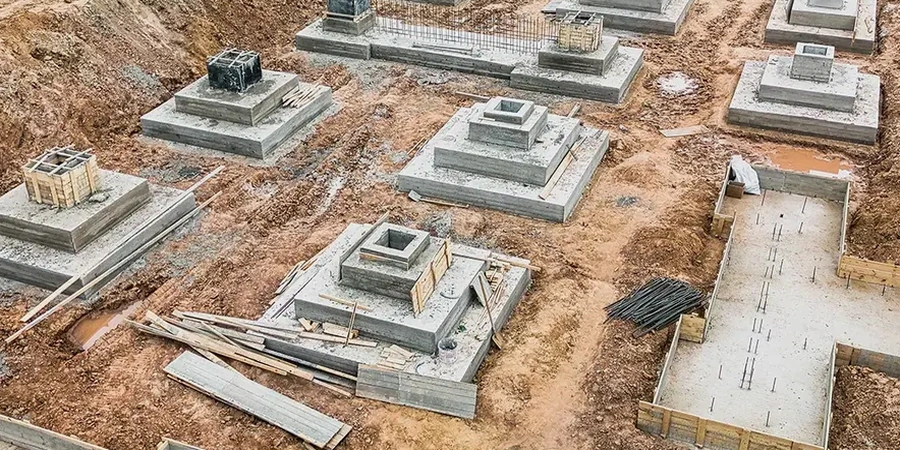
The most expensive mistake we see in Chilliwack is a structural engineer assuming a 'firm' bearing stratum 10 meters down, only to hit compressible organics at 18 meters. The Fraser River floodplain doesn't follow simple layering; it buries ancient channels filled with peat and loose silts that can add five figures to a piling change order overnight. Pile foundation design here isn't about selecting a standard section from a catalogue. It's about building a vertical load path through variable Holocene deposits and locking into a stratum that won't settle differentially under the 2,475-year seismic return period NBCC demands. Our team integrates CPT testing to map the continuous refusal profile and soil liquefaction analysis to confirm that your deep foundation stays stable when the fine sands below the water table lose effective stress during a Cascadia subduction event.
In Chilliwack's lacustrine clays, a pile's real capacity isn't the structural section: it's the remolded shear strength at the shaft interface after installation.
Reference standards
NBCC 2020 (Division B, Part 4), CSA A23.3:19 Design of Concrete Structures, Canadian Foundation Engineering Manual, 4th Edition, ASTM D1143 / D3689 (Pile Load Tests), ASTM D4945 (High-Strain Dynamic Testing)
Frequently asked questions
What pile type works best in Chilliwack's soil profile?
There's no universal answer: it depends on depth to competent bearing and the presence of cobbles or boulders. In the Sumas Prairie area, driven closed-end pipe piles often reach the Fort Langley Formation at 15 to 20 meters with good refusal and minimal spoil. Near the Vedder Canal, where gravel outwash dominates, augered cast-in-place piles can be more practical because they handle cobbles without the risk of pile tip damage that plagues H-piles.
How do you account for seismic demand in pile design for Chilliwack?
We follow NBCC 2020 seismic provisions, starting with the site-specific ground motion values from the National Building Code's online hazard tool. For Site Class D or E profiles common in Chilliwack, we apply the corresponding amplification factors. Lateral pile analysis uses p-y springs reduced for the liquefied case if CPT or SPT data indicate liquefiable layers. The structural design of the pile section then follows CSA A23.3, with the seismic load combination including the overstrength factor.
What does a pile foundation design package cost in Chilliwack?
A complete design package for a typical commercial or multi-family building in Chilliwack runs between CA$2,490 and CA$7,490, depending on the number of pile types analyzed, the complexity of the soil profile, and whether dynamic load testing or static load test interpretation is included. A straightforward single-family residence on a uniform site falls toward the lower end; a multi-story project with variable stratigraphy and a full lateral analysis falls toward the upper end.
How many borings or CPT soundings do we need before pile design can start?
For a building footprint up to 500 square meters, we recommend a minimum of three investigation points arranged to capture the corners of the planned foundation. For larger or irregular footprints, the Canadian Foundation Engineering Manual suggests a grid spacing of 15 to 25 meters depending on subsurface variability. Chilliwack's buried channel deposits often justify the tighter spacing because a single missed soft pocket can shift the pile group centroid and attract additional moment.